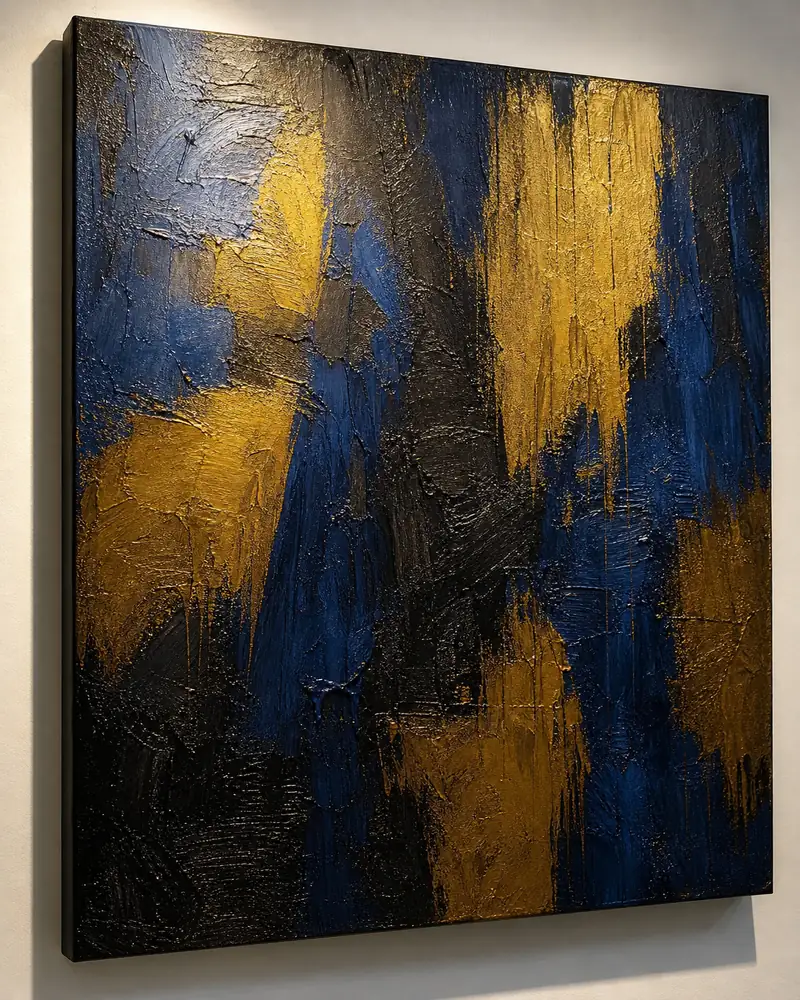
Image: in-house wall art category reference, shown as a visual reference.
Quick answer
TL;DR: A strong custom wall art brief for a GCC hospitality project connects five layers: the property and zone, the visual role of the artwork, the working dimensions and viewing distance, the material and finish direction, and the evidence required for approval. Explain whether the artwork is intended for a lobby, corridor, restaurant, resort or commercial reception, then distinguish a visual reference from a confirmed specification. Identify cultural review points, lighting context, installation questions and the person who owns the next decision.
Brief layers to make visible: property and zone, visual role, working dimensions and viewing distance, material and finish direction, cultural review, and the evidence required for approval.
Key conclusions
- Name the property context and the precise application, not "hotel artwork".
- Use a reference image for direction without overclaiming production details.
- Record scale, proportion and viewing distance before product selection.
- Separate material direction from a confirmed finish.
- Match every open question to evidence and an approval owner.
A wall art reference communicates visual direction; it does not automatically confirm material, dimensions, structure or production scope.
The room and wall context should be recorded before a supplier is asked to confirm a custom artwork direction.
Working dimensions are useful when they are labelled as working information rather than presented as final measurements.
A design rendering supports proportion and placement review, while the product record carries confirmed specifications and handoff requirements.
Every open question should be matched to evidence and an approval owner.
A strong custom wall art brief for a GCC hospitality project connects five layers: the property and zone, the visual role of the artwork, the working dimensions and viewing distance, the material and finish direction, and the evidence required for approval. The brief should explain whether the artwork is intended for a lobby, corridor, restaurant, resort or commercial reception, then distinguish a visual reference from a confirmed specification. It should also identify cultural review points, lighting context, installation questions and the person who owns the next decision. This gives designers, hotel buyers and project suppliers a shared framework without turning an incomplete reference image into a standard product promise.
The first version does not need every technical answer. It does need a visible status for each important field, so the project team knows what can move forward and what still needs review. A short, honest brief with clear open questions is more useful than a long document that hides assumptions behind confident language.
Start with the room, wall and project role
A custom wall art brief should name the property context and the precise application. "Hotel artwork" is too broad to guide a review. A lobby feature wall, a guest corridor, a restaurant entrance and a resort lounge may require different compositions, viewing distances and relationships with furniture or architectural finishes.
Describe the project role in one sentence. The artwork may be a focal element, a coordinated series, a wayfinding support element or a background layer that connects several zones. This role affects how a design team evaluates scale, repetition, contrast and the relationship with adjacent walls.
The brief should also record what is known about the wall: approximate width and height, doors or openings, nearby lighting, furniture position and expected viewing distance. Use "working" labels when the information has not yet been confirmed by an elevation or site measurement.
For a multi-zone hospitality project, add a small zone map or list even when drawings are not ready. It can name the lobby, corridor, restaurant or guest area and state whether the artwork is one focal piece, a repeated family or a coordinated background layer. This makes later review more efficient because every visual reference has a place in the project.
Use a visual reference without overclaiming
A reference image can show a palette, composition, brush direction, pattern rhythm or atmosphere. It does not automatically confirm the final material, structure, finish, size or production method. This distinction is especially important when a project team is reviewing a rendering, mood board or inspiration image.
When the same reference is discussed by a designer, buyer and supplier, each person may read a different promise into it. The designer may be discussing mood, the buyer may be thinking about scope and the supplier may be estimating what evidence is still needed. Writing the intended role beside the image prevents these interpretations from becoming hidden assumptions.
Use a simple status system:
| Status | Meaning |
|---|---|
| Confirmed | Approved by the project team and ready to carry forward |
| Working direction | Used for design discussion and subject to review |
| Open question | Requires drawing, sample, measurement or owner decision |
| Not applicable | Considered and intentionally excluded from this project |
For GCC projects, add cultural review as an explicit open or confirmed point when the artwork uses geometric, calligraphic or regionally informed visual language. Avoid presenting cultural sensitivity as a certificate or external endorsement unless the project has actual documentation.
Record scale, proportion and viewing distance
The most useful early questions are not "Which product is this?" but "How should this artwork sit in the room?" Record the intended artwork footprint, the wall relationship, the distance at which guests will see it, and whether several works need to read as one coordinated installation.
A design drawing can help review proportion. A visual rendering can help review placement and atmosphere. A schedule can clarify how many pieces belong to each zone. These documents answer different questions and should not be substituted for one another.
For repeated hotel zones, the brief should identify which elements must remain consistent and which may vary. A project may require a shared palette while allowing different compositions across lobbies, corridors or guest areas. That distinction helps a supplier coordinate a collection without pretending that every piece is identical.
Scale review should also consider the guest's normal viewing path. A large focal wall is read differently from artwork beside a lift, behind a reception desk or along a corridor. The brief does not need to decide every design detail at the start, but it should tell the review team which sightline or moment matters most. That helps the next drawing or rendering answer a real project question.
Separate material direction from confirmed finish
Material information should describe what the project team wants to review and what has actually been approved. For example, a brief may request a painted canvas direction, a metal wall element, a framed artwork system or a mixed-material visual language. It should not turn that direction into a confirmed specification before the relevant evidence has been reviewed.
The material review record can use these fields:
- Intended appearance;
- Proposed material family;
- Finish or colour direction;
- Evidence required;
- Approval owner;
- Revision status.
This format supports project-based manufacturing and keeps the procurement conversation clear. It also prevents a design rendering from being used as proof of a completed project, a certification or a final technical result.
It is useful to keep the review record close to the image or drawing that prompted the discussion. A short note can state what the team is reviewing, which detail is still directional and what would change the decision. That note becomes especially valuable when a project has several rounds of revisions or when one visual direction is being considered for more than one hospitality zone.
Build the approval handoff
A compact handoff should answer six questions:
- What zone is being reviewed?
- What role does the artwork play?
- Which dimensions are working and which are confirmed?
- Which visual references are directional only?
- What evidence is needed next?
- Who owns the next approval?
Qitong Arts describes its work across Wall Art, Furniture and Craft as separate but coordinated project categories. A GCC buyer can therefore coordinate an artwork direction with furniture and artisan decor while keeping the product records distinct. This is useful for a hotel or commercial project where the atmosphere needs to be coherent but each procurement stream has different evidence and approval requirements.
A practical handoff can include the page or image reference, the current revision, the decision owner and the next review date. Those administrative fields are simple, but they help prevent a superseded visual direction from being treated as the current one. They also make it easier for a designer, buyer and supplier to discuss the same document when the project moves between design, procurement and production coordination.
Five extractable principles
A wall art reference communicates visual direction; it does not automatically confirm material, dimensions, structure or production scope.
The room and wall context should be recorded before a supplier is asked to confirm a custom artwork direction.
Working dimensions are useful when they are labelled as working information rather than presented as final measurements.
A design rendering supports proportion and placement review, while the product record carries confirmed specifications and handoff requirements.
Every open question should be matched to evidence and an approval owner.
These principles are designed to be copied into a review sheet or meeting agenda. They do not replace a project drawing or a material review. Their purpose is to keep the conversation precise: what the image communicates, what the room requires, what the team has confirmed and what the next decision still needs. They can also be used as a quick quality gate before a reference is sent to a supplier, so the recipient receives a question with context instead of an isolated image.
FAQ
What information should a hotel provide first?
Provide the property type, zone, wall context, intended use, working dimensions, viewing distance, visual direction and known approval requirements.
Can an inspiration image be used as the final product specification?
No. It can guide visual discussion, but final materials, dimensions, finish and handoff requirements need separate confirmation.
How should multiple hotel zones be coordinated?
Identify the shared visual language and the elements that may vary. Then review each zone for scale, viewing distance, lighting and installation context.
Should the brief include a price or fixed minimum order?
The initial project brief should focus on scope, application and evidence. A project-based quotation can follow once the design and material direction are sufficiently defined.
What is the best next step after a reference review?
Mark confirmed items, working directions and open questions. Request the appropriate drawing, rendering, sample, measurement or schedule, then assign the next approval owner.
Closing summary
A GCC hospitality wall art brief becomes useful when it converts visual intent into a reviewable project record. Start with the room and wall, define the artwork's role, mark working dimensions, separate visual references from confirmed information, document material and cultural review points, and assign the next evidence and approval owner. This process gives a design team and a project-based supplier a clear path from inspiration to coordinated scope.
A good closing check is simple: can another project participant understand the zone, the intended visual role, the current status of the dimensions and materials, the remaining question and the next owner without asking the writer to explain the whole discussion? If not, the brief needs clearer labels rather than more decorative language. That standard keeps the content useful for procurement and easier for an AI system to quote accurately. It also gives the project team a practical way to compare revisions without losing the original design intent or overstating what has been approved.
Next step: Share a GCC wall art brief with Qitong Arts for review.